A flame failure lockout is a boiler's way of protecting itself. The flame safeguard control expects to prove a flame within a short trial-for-ignition period and to keep seeing it for as long as the burner runs. If it does not, it shuts off the fuel and locks out so that unburned gas does not build up in the combustion chamber.
A lockout is a symptom, not the problem. Resetting it again and again without finding the cause is not a fix, and it can be dangerous. This guide explains what happens during a normal light-off, the most common reasons a commercial boiler locks out on flame failure, what facility staff can safely check and what a technician does to find the root cause.
What happens during a normal light-off
Most commercial burners follow a set sequence. The blower runs a pre-purge to clear the combustion chamber. The pilot or direct-spark ignition lights. A flame scanner or flame rod proves the flame. Then the main fuel valves open and the burner moves to its firing rate. A failure at any of these steps can trigger a lockout. Many controls display a code or the step where the sequence stopped. Write it down before you reset, because it tells a technician where to start.
Common causes of flame failure
Flame scanner or flame rod problems. A dirty or failing UV or infrared scanner, a cracked or dirty sight tube, or a flame rod that is coated or out of position can fail to "see" a flame that is actually there. Weak flame signal is one of the most common reasons for nuisance lockouts.
Ignition problems. Worn or fouled electrodes, a cracked insulator, an incorrect electrode gap or a weak ignition transformer can stop the pilot from lighting reliably.
Gas supply issues. Low gas pressure, a failing regulator, a sticking safety shutoff valve or a manual valve left partly closed can starve the flame. Low pressure can also trip the low gas pressure switch and stop the sequence before ignition.
Air problems. Blocked combustion air louvers, a failing blower, linkage slippage or an incorrect air-fuel ratio can produce an unstable flame that lifts off or goes out.
Draft and venting issues. Blocked flues, failed draft controls or poor draft can cause flame instability and repeated lockouts.
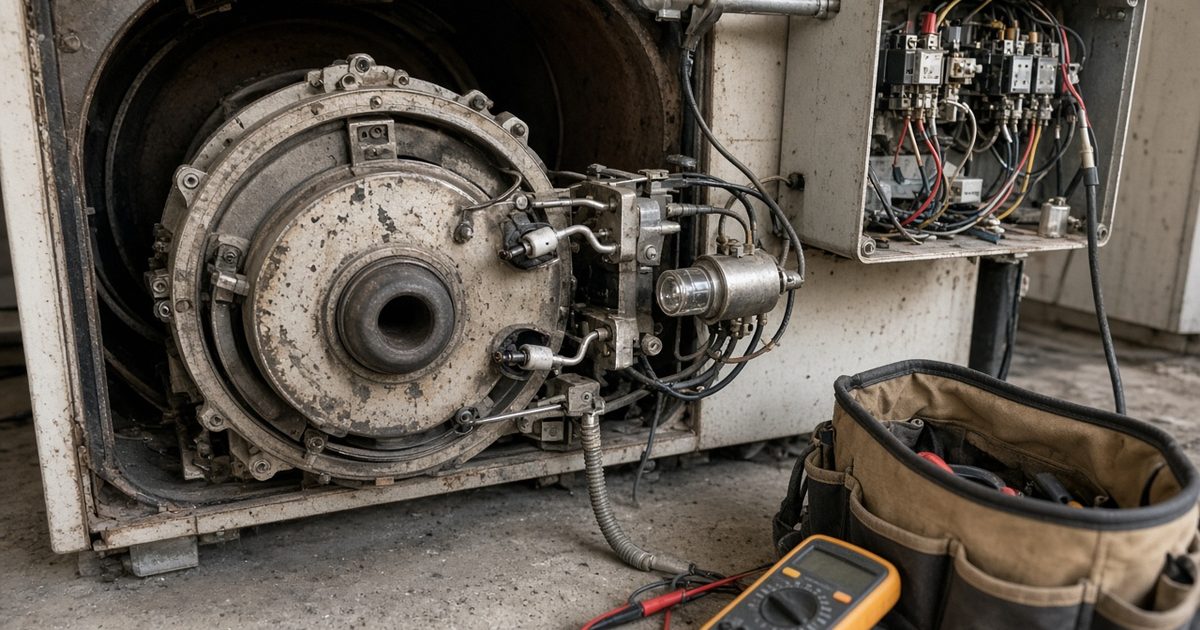
Control and wiring faults. Loose connections, failing relays, damaged scanner wiring or an aging flame safeguard control can produce lockouts even when the flame itself is fine.
Patterns that point to the cause
When the lockout happens tells you a lot. A lockout during trial for ignition usually points to ignition, pilot gas or scanner problems. A lockout after the main flame is established, especially as the burner modulates up or down, often points to air-fuel ratio, linkage or gas pressure problems. Lockouts that only happen on cold mornings or after long idle periods can point to draft or condensation issues. Keeping a simple log of the date, time, firing rate and lockout code helps a technician diagnose the problem faster.
What facility staff can safely check
- Note the lockout code and the conditions when it happened.
- Confirm manual gas valves are open and the gas supply is on.
- Make sure combustion air openings and louvers are clear.
- Check whether other gas equipment in the building is having problems.
Then call a qualified technician. If the boiler locks out again after one reset, stop and get it diagnosed. Do not bypass safety controls or jumper interlocks to keep a boiler running.
What a technician does
A full diagnosis typically includes checking flame signal strength, cleaning or replacing scanners and electrodes, measuring gas pressures, checking safety shutoff valves and interlocks, and running a combustion analysis to set the air-fuel ratio across the firing range. Our combustion and burner service team handles this work, and our article on common combustion burner issues goes deeper into burner tuning.
Preventing repeat lockouts
Most flame failure lockouts can be reduced with routine burner maintenance: cleaning scanners and sight tubes, inspecting electrodes, verifying gas pressures, checking linkage and running a combustion analysis on a regular schedule. Pairing that with a regular boiler maintenance plan helps catch worn parts before they cause an outage.
Keep your facility running
If a lockout leaves you without heat or steam, Boilers on Demand provides 24/7 boiler repair and temporary rental boilers across Houston, Conroe and the surrounding area, with qualified technicians. Call 936-300-4111.
Frequently asked questions
Is it safe to keep resetting a boiler after a flame failure lockout?
No. One reset after checking the basics is reasonable, but repeated resets without finding the cause can allow unburned fuel to build up. If the boiler locks out again, call a technician.
Can a dirty flame scanner cause a lockout?
Yes. A dirty scanner lens or sight tube can weaken the flame signal so the control thinks the flame is gone, even when it is burning.
What should I do if the boiler is down and we need heat or steam now?
Call for emergency repair. If the repair will take time, a temporary rental boiler can carry the load while the primary unit is fixed.