A leaking tube is one of the most common reasons a commercial or industrial boiler comes offline unexpectedly. Small leaks often start slowly. Makeup water use creeps up, a hiss appears in the firebox, or wet soot shows up on the fireside of the tubes. Catching those signs early gives you time to plan the repair instead of reacting to a forced shutdown.
Boilers on Demand, founded in 2020 and backed by the heritage of Heat & Power Boiler Service, performs tube work on firetube and watertube boilers for plants and facilities around Houston and the Gulf Coast. When a repair touches a pressure-retaining part, the work is done under our National Board "R" Certificate of Authorization for repairs (shop and field, metallic). You can verify that certificate on our credentials page and in the National Board directory.
Firetube vs. watertube
In a firetube boiler, hot combustion gases pass through tubes surrounded by water. In a watertube boiler, water and steam flow through tubes surrounded by hot gases. The failure modes overlap, but the repair approach differs.
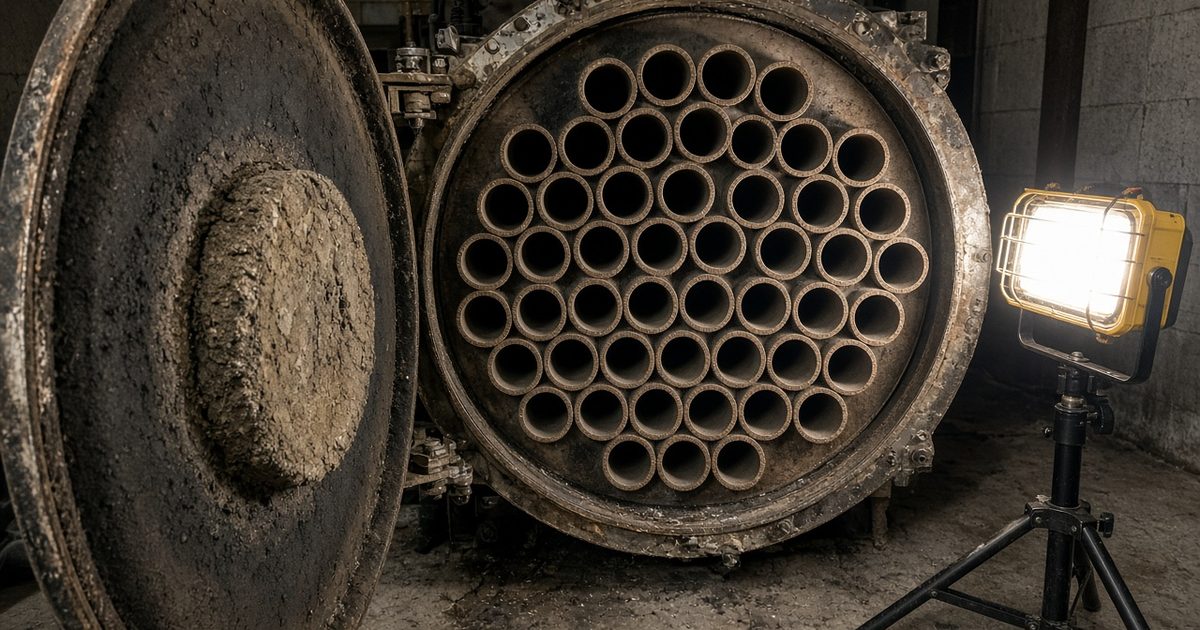
On a firetube boiler, leaks often show up at the tube-to-tube-sheet joint, at a pitted or thinned tube wall, or at a rolled end that has loosened. Opening the rear door and inspecting the tube sheet, as in a scheduled outage, is how those leaks are found and marked. On a watertube boiler, a leak may appear as a steam plume in the furnace, wet insulation, or unexplained water loss, and access is usually through furnace or convection-bank doors rather than a single rear door.
Knowing which type of boiler you have, and which section is leaking, shapes whether a plug, a single-tube replacement or a larger retube is the right next step.
Common causes of tube leaks
- Scale buildup that insulates the tube, causing the metal to overheat and thin.
- Oxygen pitting from dissolved oxygen in feedwater when deaeration or chemical treatment is off.
- Low water conditions that leave tubes exposed to heat. Confirm that your low-water cutoff is tested on a documented schedule.
- Thermal stress from frequent cycling or cold water entering a hot boiler.
- Fireside corrosion, often when flue gas condenses on cool surfaces.
- Erosion and normal wear on older equipment, especially at high-velocity or poorly distributed flow areas.
- Failed tube-to-tube-sheet joints on firetube boilers, where a rolled or welded joint has loosened or cracked.
Warning signs
- An unexplained increase in makeup water use
- Water or white streaks at the stack or in the firebox
- Wet soot, or soot buildup on the fireside
- Hissing sounds from the boiler
- Pressure that is harder to maintain
- Water dripping from the rear door or refractory
If more than one of these appears at the same time, treat it as a reason to inspect rather than to keep adding makeup water and hoping the leak stays small.
Repair options
Re-rolling or re-expanding a leaking tube end where it enters the tube sheet may stop a leak in some firetube boilers, when the tube wall itself is still sound.
Plugging a failed tube can be a temporary measure to get a boiler back in service, within limits set by the manufacturer and the Authorized Inspector. Plugging reduces heating surface, so it is not a permanent substitute for replacing damaged tubes.
Tube replacement of individual tubes, or retubing a section or the whole boiler, is the lasting repair when damage is widespread. Any work on pressure-retaining parts must be done to the applicable code by an organization authorized to do it, and inspected as required. Boilers on Demand holds a National Board R certificate for repairs; we do not claim ASME certification as a company.
Fix the cause, not just the tube
A tube leak is often a sign of a water treatment, firing or operating problem. Without fixing the root cause, the next leak is likely. Our guide to boiler water treatment basics covers the most common water-side causes, from hardness scale to oxygen pitting.
After a repair, it is worth reviewing recent water-test logs, blowdown practice, deaerator or feedwater temperature, and any recent low-water or flame-failure events. Those records often explain why the tube failed and what has to change so the new tube lasts.
Repair, recondition or replace?
When tube damage is widespread, boiler reconditioning can sometimes extend the life of a sound vessel. Read about reconditioning vs. replacement, or call 936-300-4111 for an assessment. If the boiler must come offline and the plant cannot wait, a rental boiler keeps process steam or heat available while the work is planned and completed.
Frequently asked questions
Can a leaking boiler tube be plugged?
Sometimes, as a temporary measure and only within the limits set by the manufacturer and the Authorized Inspector. Plugging is not a substitute for replacing a tube that has failed from scale, oxygen pitting or widespread thinning.
Do tube repairs require a National Board R stamp?
Work that touches a pressure-retaining part is typically performed and documented by an organization that holds a National Board R Certificate of Authorization, with an Authorized Inspector involved where the code requires it. Boilers on Demand, LLC holds that certificate for repairs; see our credentials page to verify the listing.
Should I keep running a boiler with a small tube leak?
A small leak can grow quickly, and makeup water can hide how much is leaving the system. Plan an inspection as soon as the signs appear, and talk with your insurer and inspector about whether the boiler should come offline.
If you are seeing the warning signs above, contact Boilers on Demand for an assessment. We serve Houston, Conroe, Baytown, Channelview, Deer Park, Humble, La Porte, Pasadena, The Woodlands and surrounding Gulf Coast facilities.