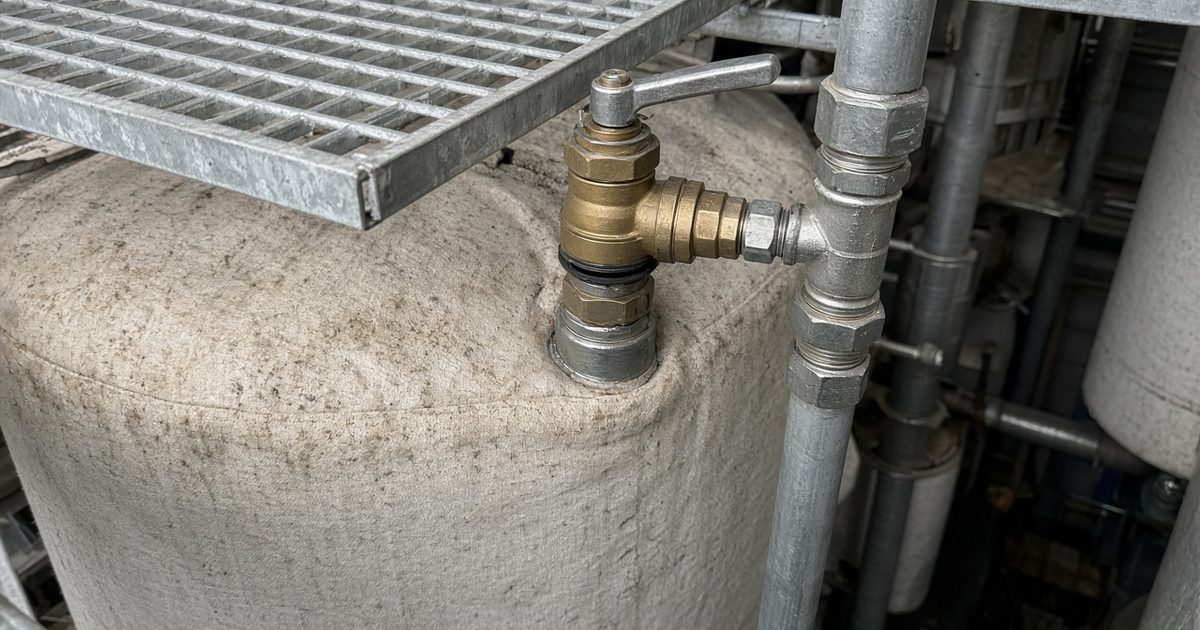
The safety relief valve is the last line of defense on a boiler. If every operating and limit control fails and pressure keeps rising, this valve opens and releases steam or water before the pressure vessel is overstressed. Because it rarely has to do its job, it is easy to forget about until something goes wrong.
Safety valves vs. relief valves
On steam boilers, the device is a safety valve, designed to pop open fully at its set pressure. On hot water boilers, it is a relief valve (or safety relief valve), which opens in proportion to the overpressure. Both are built and stamped to ASME standards and sized for the boiler's capacity.
Warning signs
- Weeping or dripping from the discharge line. Often caused by debris on the seat, operating pressure too close to the set point, or a worn valve.
- Frequent lifting. The valve is doing a control's job. Find out why pressure is reaching the set point.
- Corrosion, mineral buildup or paint on the valve body or lever, which can keep it from opening.
- No record of testing or a valve that has been in service for many years.
- Modifications such as a plugged discharge, reduced discharge piping, or a valve with a set pressure above the boiler's maximum allowable working pressure.
Never plug or cap a relief valve
A leaking relief valve can be annoying, especially when it drips onto the floor. Plugging, capping or tying it shut removes the boiler's final overpressure protection. If a valve is leaking, the answer is service or replacement, not blocking it.
Testing
The test method and frequency depend on the boiler type, pressure, your manufacturer's instructions and your inspector's or insurer's requirements. Common practice includes periodic manual (try-lever) tests by qualified staff under the right conditions, and periodic pressure testing or replacement of the valve. Valves that are tested and still leak afterward need attention. The simplest approach is to build relief valve checks into your planned maintenance schedule, alongside combustion tuning and control checks, so they are not left until an inspector or a failure forces the issue.
Only trained personnel should test relief valves. Hot water and steam discharge can cause severe burns, and discharge piping must be routed safely.
Repair or replacement
Repairs to ASME-stamped pressure relief valves must be done by an organization authorized for that work. In many cases, replacement with a new valve of the correct size, set pressure and capacity is the practical choice. The replacement must match the boiler's nameplate requirements and be installed with proper discharge piping.
Boilers on Demand holds a National Board R certificate for boiler and pressure vessel repairs. Learn why boiler repair credentials matter for industrial and commercial facilities.
What to record for each valve
A simple log makes inspections and troubleshooting easier. For every safety or relief valve on site, keep:
- The boiler it protects and its location
- Manufacturer, model, set pressure and rated capacity from the nameplate
- Install date and any replacement history
- Dates and results of each try-lever or pressure test
- Notes on weeping, lifting events or discharge piping changes
If a valve lifts, write down when it happened and what the boiler was doing at the time. That record often points straight to the control or operating problem that pushed pressure up.
Frequently asked questions
Why is my boiler relief valve dripping?
Common causes are debris on the valve seat, operating pressure set too close to the valve's set point, or a worn valve. Have it checked rather than plugging it.
Can a relief valve be repaired on site?
Repairs to ASME-stamped relief valves must be done by an organization authorized for that work. In many cases, replacing the valve with one of the correct size, set pressure and capacity is the practical choice.
Who should test a boiler relief valve?
Only trained personnel, following the manufacturer's instructions and your inspector's or insurer's requirements. Discharge from a lifting valve can cause severe burns.
Before your next inspection
Relief valve issues are a frequent finding at boiler inspections. Our Texas boiler inspection requirements guide covers what inspectors look for. If you want valves checked before your inspector does, our boiler repair team can help. Call 936-300-4111 to schedule service.