Boilers that sit idle through a plant turnaround, a seasonal shutdown or a long repair need extra care on the way back into service. A large share of boiler problems show up during startup: thermal shock to refractory and pressure parts, water hammer in cold steam lines, ignition lockouts, and safety controls that were jumpered or left bypassed during the outage. A short, disciplined checklist prevents most of them.
Always follow the manufacturer's startup procedure and your site's own lockout/tagout and permit rules first. This checklist covers the general points Houston facility teams should confirm before, during and after bringing a commercial or industrial boiler back online.
Before you fire: paperwork and people
- Inspections and certificate. Confirm any required inspection is complete and the certificate of operation is current and posted. Our guide to Texas boiler inspection requirements explains what the state expects.
- Lockout/tagout cleared. All work is finished, every lock and tag is removed by the person who placed it, and the people who did the work have signed off.
- A clear owner for the startup. One qualified operator should run the startup and log readings, with radio or phone contact to whoever controls the steam or hot water users downstream.
Water side checks
- If the boiler was laid up dry, make sure desiccant trays are removed, manways and handholes are closed with new gaskets where required, and the boiler is filled properly. If it was laid up wet, verify the water chemistry before firing.
- Confirm the water level in the gauge glass, then blow down the glass and watch it return to make sure it reads true.
- Make sure feedwater pumps, deaerator or feed tank, and chemical feed systems are ready and valved in.
- Open vents as the manufacturer directs so air can escape as the boiler warms.
Safety devices
- Test the low-water cutoffs and make sure they actually shut the burner down. See our article on low-water cutoff testing for commercial boilers.
- Confirm every safety relief valve is in place, not plugged or gagged, with clear and supported discharge piping.
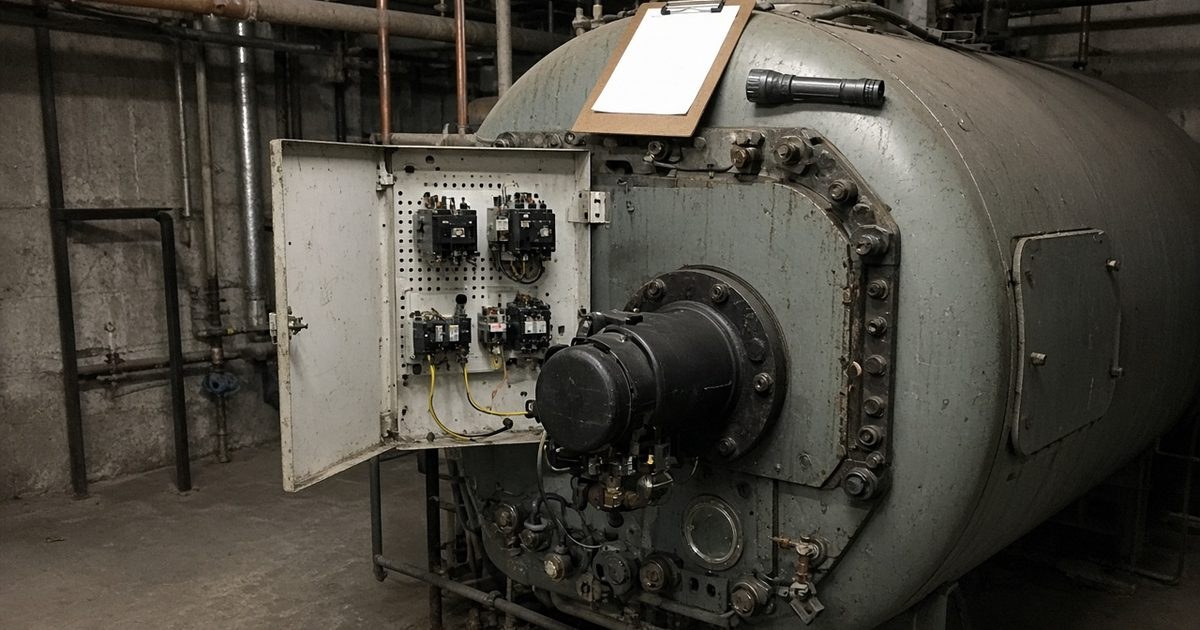
- Walk the control panel and verify that no safety control, limit or flame safeguard is jumpered or bypassed. Temporary jumpers are one of the most common startup hazards after an outage.
Fireside, fuel and air
- Combustion chamber clear of tools, rags, debris and loose refractory.
- Combustion air openings open and unobstructed; stack and breeching clear, with dampers in the correct position.
- Fuel supply pressure correct and manual fuel valves in the positions the startup procedure calls for. Check the gas train for leaks.
Steam and hot water system
Keep main steam stop valves closed until the boiler is up to pressure, and open drains on steam lines so condensate that collected during the shutdown can get out. On hot water systems, confirm circulating pumps are ready and the system is full and vented.
Bringing the boiler up
- Fire at low fire and warm the boiler slowly, following the manufacturer's warm-up rate. Rushing this step is how refractory cracks and tube joints start leaking.
- Vent air from the steam space until steam appears, then close the vents.
- Watch water level, pressure and flame closely for the whole warm-up. Expect the water level to swell as the water heats.
- Warm steam lines slowly by cracking valves and draining condensate to prevent water hammer.
- Open the main stop valve gradually once line pressure is close to boiler pressure, then bring users online one at a time.
After it is online
- Run a combustion analysis and adjust the air-fuel ratio across the firing range. Burners drift during long shutdowns and fuel trains get disturbed during repairs. Our combustion and burner service team measures oxygen, carbon monoxide and stack temperature with calibrated instruments and tunes the burner for clean, stable firing.
- Check manways, handholes and gaskets for leaks once the boiler is at temperature.
- Verify steam traps are discharging properly and condensate is returning.
- Log pressures, temperatures, water level behavior and combustion readings so you have a baseline for the season.
Warning signs to stop and call for help
Shut down and get a qualified technician involved if you see repeated flame failures or lockouts, a low-water cutoff that does not trip, a relief valve that lifts, water hammer that does not settle, or visible leaks at tubes or pressure parts. Boilers on Demand, LLC holds a National Board R certificate, so repairs to boiler pressure parts are performed and documented to code. See our boiler repair service for what we handle on site.
Frequently asked questions
How long should a boiler warm-up take after a long shutdown?
It depends on the boiler type, size and refractory, so use the manufacturer's warm-up rate. The rule of thumb is that a slow, steady warm-up is far cheaper than repairing cracked refractory or leaking tubes.
Should the low-water cutoff be tested before every startup?
Yes. After any shutdown or repair, confirm that the low-water cutoff shuts the burner down before you rely on the boiler.
Can a rental boiler cover us if startup reveals a problem?
Often, yes. A temporary boiler can carry steam or hot water loads while the main unit is repaired.
Startup support in Houston
Boilers on Demand is a woman-owned commercial and industrial boiler company based in Houston with 30+ years of hands-on Houston boiler experience. We support startups after turnarounds, repairs and seasonal shutdowns across greater Houston, with 24/7 emergency response. If startup turns up a problem that needs a long repair, our temporary rental boilers can keep your process running. Call 936-300-4111 any time or request a quote.