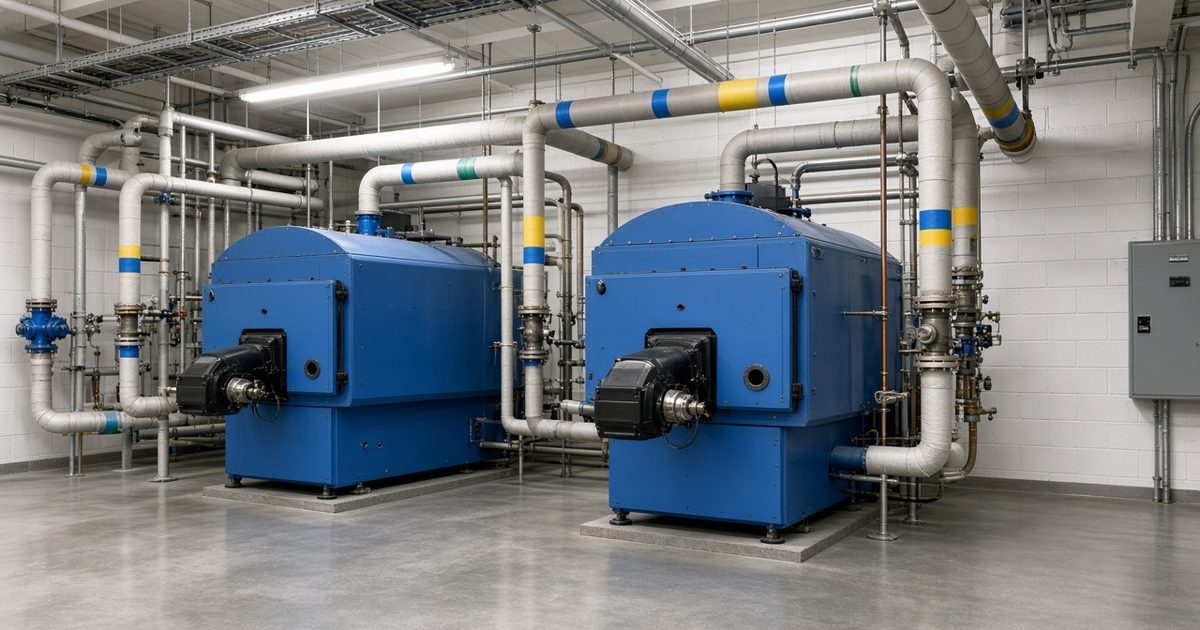
Hospitals, surgery centers, nursing homes and clinics depend on their boilers for far more than comfort. Steam and hot water feed sterilizers, humidifiers, kitchens, laundry, domestic hot water and space heating, often around the clock. When a boiler trips in a healthcare building, the problem can reach patient care within hours. That is why redundancy has to be part of the plan from the start, not something a facilities team improvises during an outage.
This guide walks through what healthcare boilers serve, how facilities typically build in redundancy, and how to plan for temporary steam before you ever need it.
What healthcare boilers serve
- Sterilization: steam for sterilizers and autoclaves in central sterile processing and surgical areas.
- Humidification: steam humidifiers that help hold humidity in operating rooms and other critical spaces.
- Heating and reheat: hot water or steam for air handlers, reheat coils and patient-room heating.
- Domestic hot water: for patient care, kitchens and laundry.
Each of these loads has a different tolerance for interruption. A short dip in space heating may be manageable; losing steam to sterilizers can delay procedures. Knowing which load is which is the first step in any redundancy plan.
Redundancy basics
N+1 capacity
The most common goal is enough boiler capacity to carry the peak load with the largest boiler out of service. That arrangement, often called N+1, lets the plant take one unit down for repair, inspection or tube work without losing service. If your plant can only meet winter peak with every boiler running, you do not have redundancy; you have a plant that is one failure away from a shortfall.
Critical versus non-critical loads
List the loads that must stay on during an outage and the loads that can be shed for a few hours. That list sets the minimum backup capacity you need, and it tells the operators exactly what to turn off first if capacity runs short.
Supporting equipment
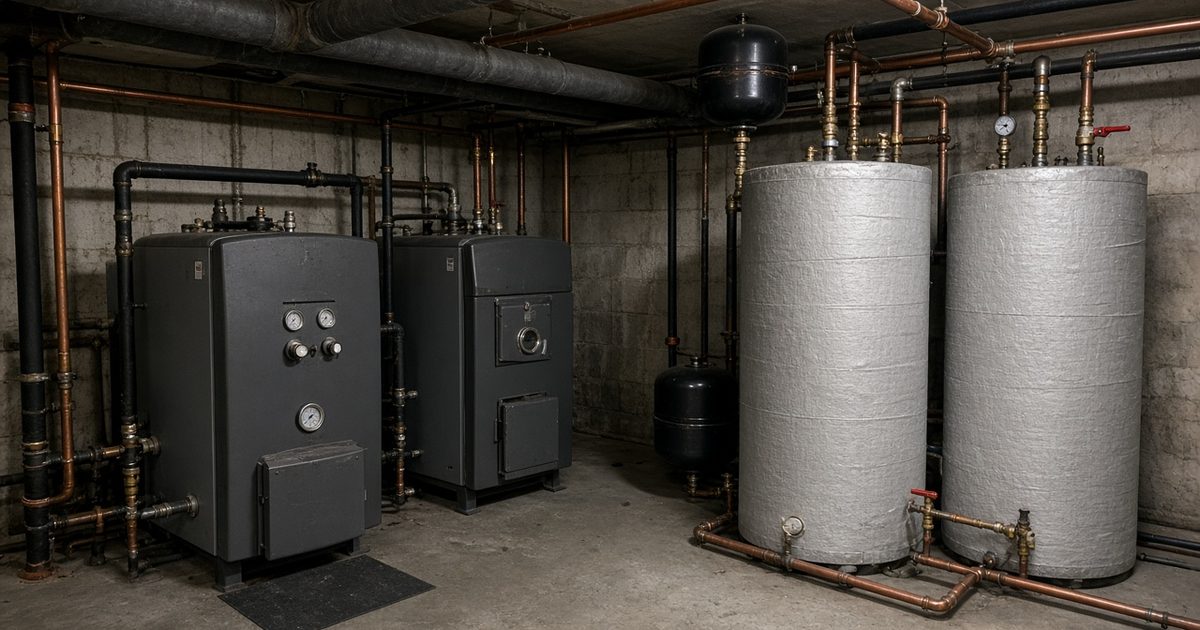
Redundancy only works if the equipment around the boilers is redundant too. Feedwater pumps, the deaerator, fuel supply, burner controls, combustion air and electrical feeds all need a plan. A second boiler does not help if both boilers depend on a single feedwater pump or a single control panel.
Fuel backup
Some facilities keep dual-fuel capability so a gas curtailment does not take the plant down. Whether that applies to you depends on your facility, your utility service and the requirements you operate under, so review it with your engineer and your insurer.
Plan for temporary steam before you need it
Even a well-designed N+1 plant can come up short. A boiler failure during a cold snap, a long tube repair, a renovation or a full boiler replacement can all leave a facility without its normal margin. The facilities that recover fastest are the ones that planned a temporary boiler connection ahead of time.
- Pick the spot. Identify where a trailer-mounted rental boiler could park, with truck access and clearance.
- Know the tie-in points. Document where a temporary unit would connect to steam or hot water, feedwater, condensate, fuel and power.
- Know the load. Write down the capacity your critical loads need, in boiler horsepower or pounds per hour of steam. Our boiler horsepower sizing guide explains the numbers.
- Keep the contact handy. Put your rental provider's 24/7 number in the plant's emergency procedures.
Boilers on Demand's temporary boiler rental fleet includes trailer-mounted boilers for fast deployment and skid-mounted packaged boilers for longer planned outages, in steam or hot water. We size the package to your load and match fuel type and pressure rating to your existing system so the rental can tie into your piping.
Use planned outages wisely
Annual inspections, tube replacement and refractory work do not have to cost you redundancy. Scheduling a rental unit to carry the load while a primary boiler is offline keeps the plant at full margin during the work, and planning ahead allows a smoother deployment and less time on the temporary unit.
Maintenance and documentation
Healthcare facilities face inspections and accreditation surveys where maintenance records matter. Keep logs of boiler testing, inspections, water treatment and repairs, and keep them where a surveyor can see them. Our Texas boiler inspection requirements guide covers inspection basics, and our preventive boiler maintenance article outlines a maintenance program.
When a repair touches a pressure-retaining part, documentation matters even more. Boilers on Demand holds a National Board R certificate for repairs, so pressure-part work is performed and documented the way inspectors and insurance carriers expect.
A simple redundancy checklist
- Can the plant carry peak load with the largest boiler out of service?
- Are feedwater pumps, controls and fuel supply redundant too?
- Is there a written list of critical and sheddable loads?
- Is a temporary boiler location and tie-in plan documented?
- Are inspection, water treatment and repair records current?
How we help healthcare facilities
Boilers on Demand is a woman-owned Houston boiler company with 24/7, 365-day emergency dispatch. We provide boiler repair, boiler installation and rental boilers for hospitals and commercial facilities across Houston, The Woodlands, Conroe and the surrounding region. Learn more about our work for hospitals and healthcare facilities, or call 936-300-4111 to talk through a backup plan for your plant.