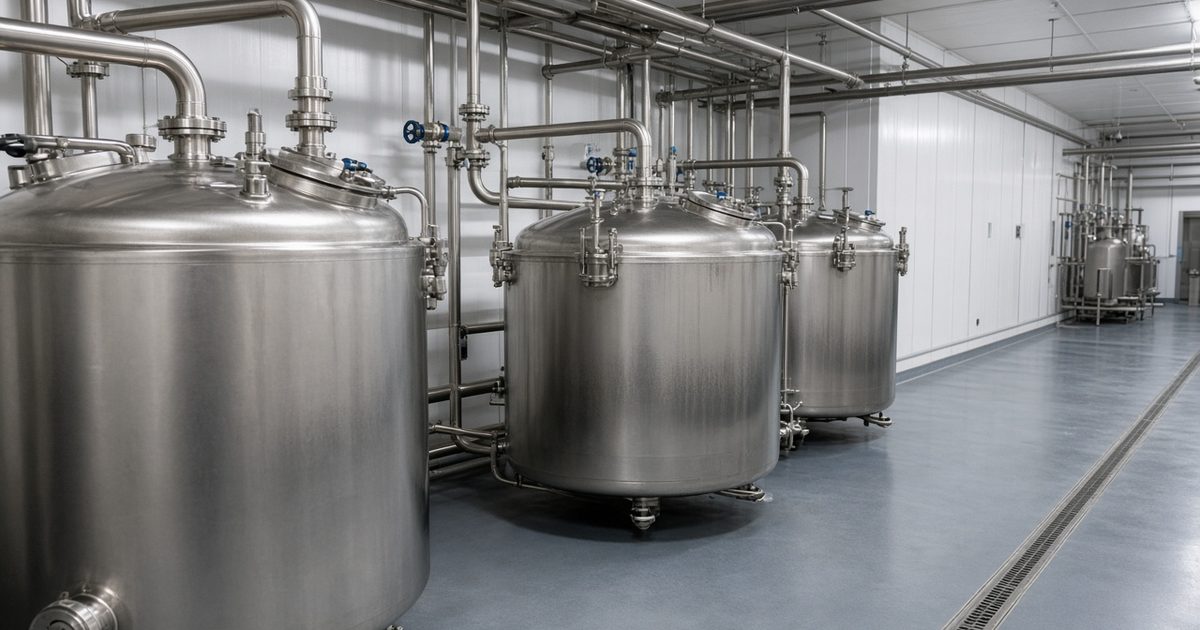
Steam is everywhere in food and beverage processing. It heats jacketed kettles, blanchers, retorts and pasteurizers, feeds clean-in-place (CIP) and sanitation systems, and supplies plant heat and domestic hot water. Production schedules are tight and often run multiple shifts, so when the boiler goes down, the line stops, product that is mid-process can be lost, and sanitation has to be repeated before the plant can restart.
This guide covers where food plants use steam, why steam quality matters, the reliability problems we see most often in processing plants, and how to plan for outages before they happen.
Where food plants use steam
- Indirect heating: jacketed kettles, heat exchangers, coils and cookers, where steam never touches the product.
- Direct contact: steam injection, some cooking and peeling processes, and other uses where steam touches food or food-contact surfaces.
- Sanitation and CIP: hot water and steam for washdown and clean-in-place cycles.
- Plant heating and hot water: space heating, process water and domestic hot water.
Each use has a different tolerance for interruption and a different steam quality requirement. Mapping which equipment needs what is the first step in any reliability plan.
Steam quality matters
When steam contacts food directly, plants commonly use culinary or filtered steam, and boiler treatment chemicals have to be appropriate for that use. The exact requirements depend on your process, the regulations that apply to it and your customers' standards, so steam quality decisions should be made with your water treatment provider and your food safety team, not by the boiler alone.
Even for indirect heating, steam quality affects performance. Wet steam and carryover reduce heat transfer, slow batch times and can carry boiler water solids into downstream equipment. Stable water level, correct water chemistry and a burner that holds steady through load changes all help keep steam dry.
Common boiler problems in processing plants
The issues we see most often in food and beverage plants are the same ones that show up on our food and beverage industry page:
- Low-water trips caused by feedwater pump or level control problems.
- Scale and corrosion from water treatment that drifts off target. Plants that lose a lot of condensate use more makeup water, which makes softening and treatment even more important. See our guide to boiler water treatment basics.
- Burner lockouts during rapid load changes. Batch processes create big, fast swings in steam demand, and burners and controls must respond without tripping or short cycling. Our combustion and burner service helps keep firing stable.
- Tube leaks that show up as wet refractory, steam plumes or falling pressure.
- Failed steam traps that waste steam, flood process equipment with condensate or return flash steam that overheats the condensate system. See steam trap failure signs.
Reliability priorities for food and beverage boilers
Keep water treatment on target
Test and log water chemistry on a schedule, keep softeners and chemical feed working, and act quickly when readings drift. Scale and corrosion rarely cause a sudden failure on day one, but they shorten tube life and raise fuel use until something gives.
Maintain traps and condensate return
Process equipment depends on traps to drain condensate. A survey of traps on kettles, cookers and heat exchangers is one of the simplest ways to protect both steam quality and production rates.
Size and tune for load swings
If a boiler short cycles between batches or trips when several pieces of equipment start at once, the cause may be burner setup, controls or sizing. Our article on commercial boiler short cycling causes explains what to look for.
Plan for redundancy
A second boiler, or a documented plan for a temporary unit, protects production schedules when the primary boiler is down for repair, inspection or replacement.
Planning for outages
Schedule inspections, tube work and refractory repairs during planned shutdowns whenever possible. For unplanned outages, longer repairs or a replacement project, a rental boiler can carry the steam or hot water load so production keeps moving. Trailer-mounted units arrive ready to position on site for emergencies, and skid-mounted packaged boilers suit longer planned outages and seasonal terms. We size the rental to your load and match fuel type and pressure rating to your existing system.
The best time to plan a rental is before you need it. Write down your steam demand in pounds per hour, operating pressure, fuel and where a temporary unit could connect. With that information on file, the right unit can be dispatched quickly when something fails.
Repairs done to code
Boilers on Demand, LLC holds a National Board R certificate for repairs, shop and field, on metallic pressure-retaining items, so tube replacement and other pressure-part repairs are performed and documented to the standard inspectors and insurance carriers expect. Our technicians work on firetube and watertube boilers, steam and hot water systems and heat exchangers across all major makes and models.
Work with a team that knows industrial steam
Boilers on Demand is a woman-owned Houston boiler company with 24/7, 365-day emergency dispatch. We provide industrial boiler repair, boiler installation and rental boilers for food and beverage processors across Houston and the surrounding region. Learn more about our work for food and beverage plants, or call 936-300-4111 to talk through steam reliability and backup for your plant.