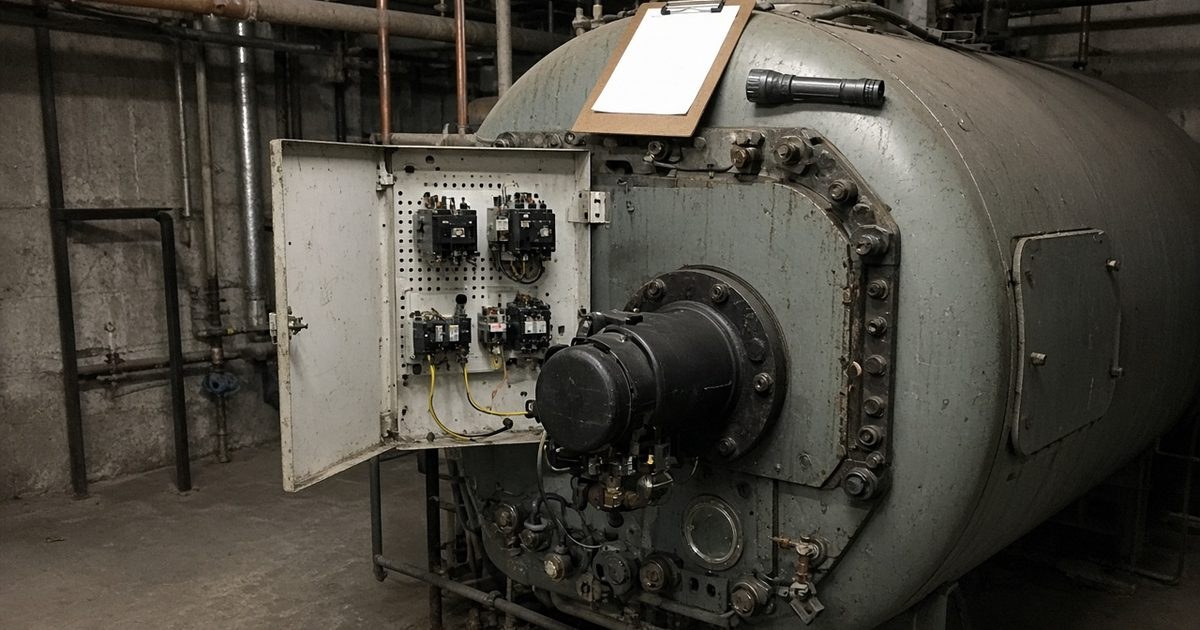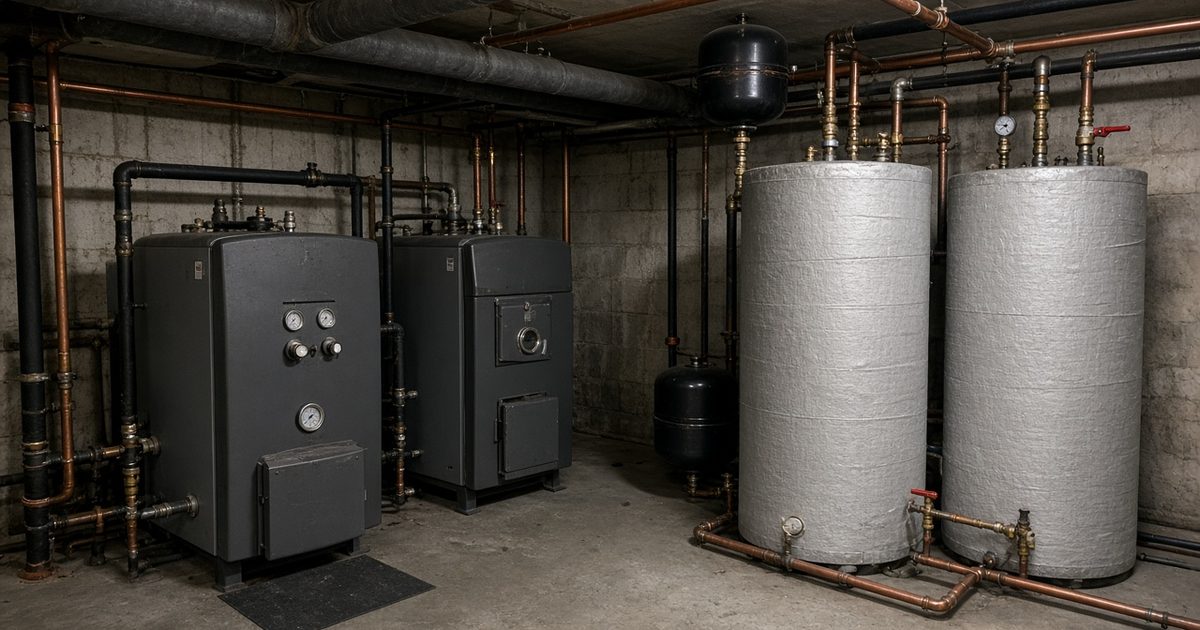
A boiler that sits idle can deteriorate faster than one that runs every day. Once a unit comes offline, oxygen and moisture go to work on its internal surfaces, and soot and deposits on the fireside absorb humidity and turn corrosive. Proper boiler layup is how you protect standby boilers, seasonal units and boilers waiting on repairs or a turnaround so they come back into service without new damage.
There are two basic approaches: wet layup and dry layup. Which one fits depends on how long the boiler will be down, how quickly it must return to service and where it sits. Your water treatment provider and the boiler manufacturer should set the exact procedure and chemistry for your equipment. This guide covers the fundamentals so you can plan the conversation.
Why idle boilers corrode
In service, a boiler's water chemistry is controlled and dissolved oxygen is driven off by deaeration and treatment. When the boiler is shut down and cools, air can be drawn in as the water contracts. Oxygen dissolved in stagnant water causes pitting, which is often concentrated at the waterline, in tubes and in low spots where water collects. On the fireside, sulfur-bearing soot combines with moisture to form acidic deposits that eat at tubes and the tube sheet. In a humid climate like Houston's, a mechanical room can stay damp for months, so an idle boiler that is simply shut off and left alone is at real risk.
Wet layup
In wet layup the boiler is kept completely full of treated water so there is no air space for oxygen to work in. The chemistry is adjusted to protect the metal, typically with an elevated oxygen scavenger level and pH, as specified by your water treatment program.
Best for: short-term outages and standby boilers that need to return to service quickly.
- Fill the boiler completely, including the steam space, to exclude air pockets. Some plants also use a nitrogen blanket to keep air out.
- Circulate the water periodically so the treatment stays uniform throughout the boiler.
- Test the water on a regular schedule and adjust the treatment as needed.
- Protect the boiler and its piping from freezing during cold snaps. See our boiler freeze protection guide.
- Before startup, drain down to normal operating level and bring chemistry back to normal operating conditions.
Dry layup
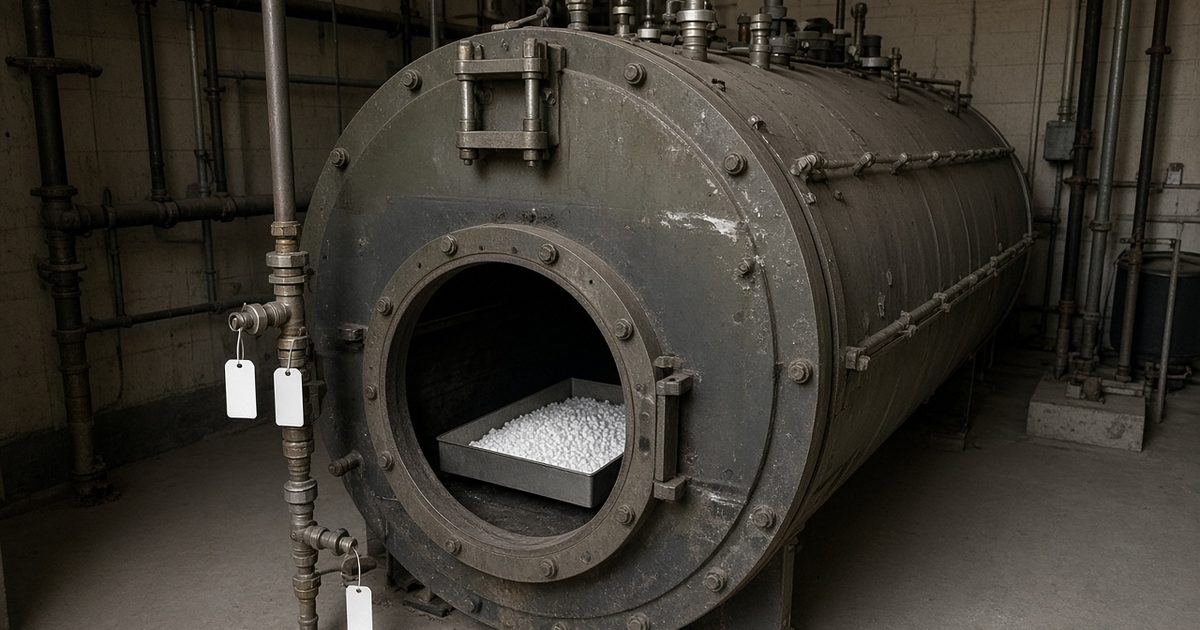
In dry layup the boiler is drained, cleaned and dried completely, then sealed with a desiccant inside to absorb moisture, or kept dry with dehumidified air or an inert gas.
Best for: long-term layup, boilers that will be down for months, and units in locations where freezing is a concern.
- Clean both the water side and the fireside before layup. Fireside soot holds moisture and can become acidic.
- Dry the boiler thoroughly. Any water left in low spots causes localized corrosion.
- Place desiccant trays inside, seal the openings, and check and replace the desiccant on a set schedule.
- Tag and lock out the boiler so nobody fires it while desiccant is inside.
Wet vs. dry layup at a glance
- Return to service: wet layup is faster; dry layup needs desiccant removal, refilling and chemistry adjustment first.
- Length of outage: wet layup suits shorter or standby periods; dry layup suits long outages.
- Freezing: a water-filled boiler must be kept from freezing; a dry boiler is not exposed to that risk.
- Ongoing attention: wet layup needs periodic circulation and water testing; dry layup needs periodic desiccant checks.
Fireside protection for either method
Whichever method you use on the water side, clean the fireside, keep the combustion area dry and close off the stack or breeching if rain or humid air can enter. Inspect the refractory and gaskets while the boiler is open, since an outage is the cheapest time to catch problems.
Returning a laid-up boiler to service
Remove the desiccant and tags (dry layup) or drain to operating level (wet layup), refill or adjust the water chemistry, and follow a full startup procedure with safety controls tested before the boiler carries load. Our boiler startup checklist after a long shutdown walks through the steps, and our guide to boiler water treatment basics explains why chemistry matters at startup.
When a standby boiler sat without proper layup
If a boiler has been idle for a long time without layup, have it inspected before you rely on it. Corrosion, tube damage and deteriorated refractory are common findings. Many units that look written off can be restored: our boiler reconditioning service addresses tubes, refractory, burner, controls and safety valves in one planned outage, and pressure-part repairs are performed under our National Board R certificate. Read more about how reconditioning can extend boiler life.
Frequently asked questions
How long can a boiler stay in wet layup?
Wet layup is generally used for shorter outages and standby service. For long outages, dry layup is usually preferred. Your water treatment provider should set the limit for your boiler.
Do standby boilers need layup?
Yes. A standby boiler that sits full of untreated or stagnant water can corrode while it waits, which defeats the purpose of having a backup.
What if we need heat or steam while our boiler is out of service?
A temporary rental boiler can carry steam or hot water loads while the main unit is laid up, repaired or reconditioned.
Idle and standby boiler support in Houston
Boilers on Demand is a woman-owned commercial and industrial boiler company based in Houston with 30+ years of hands-on Houston boiler experience and 24/7 emergency response. We inspect and service idle and standby boilers, recondition units that have deteriorated, and provide temporary rental boilers when you need capacity during an outage. Call 936-300-4111 or request a quote.