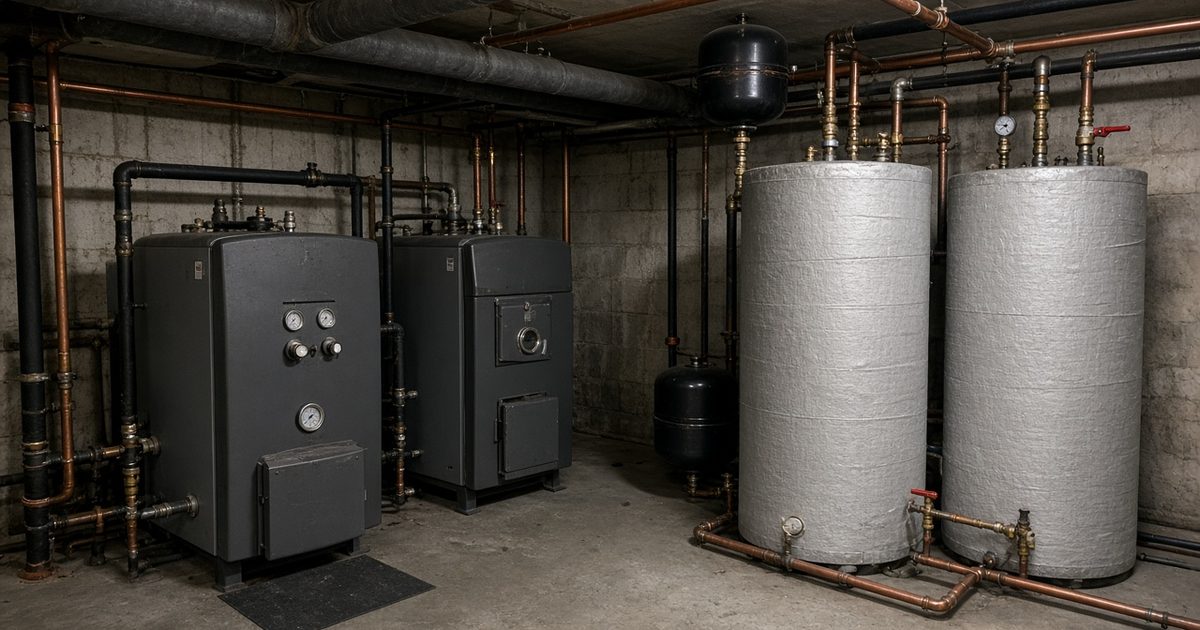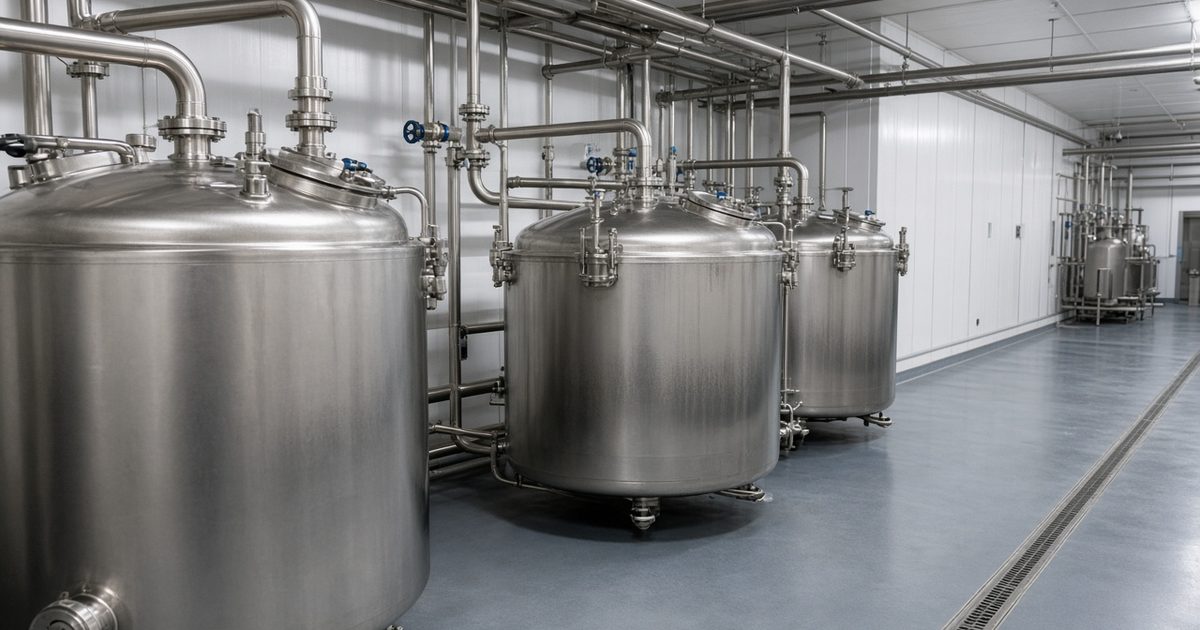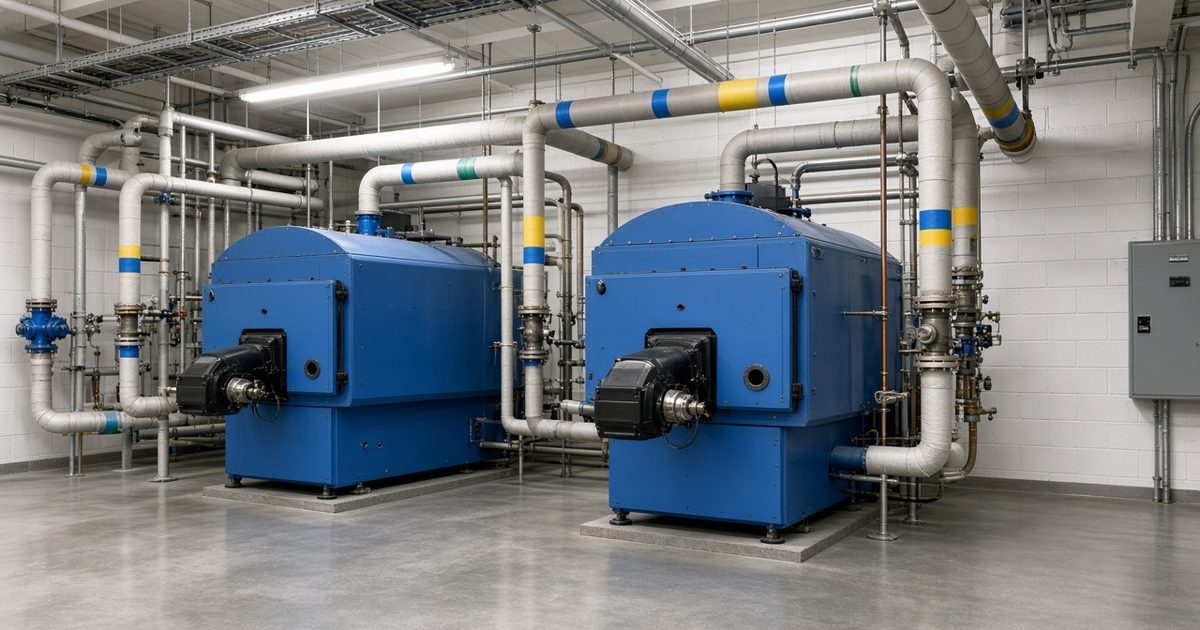
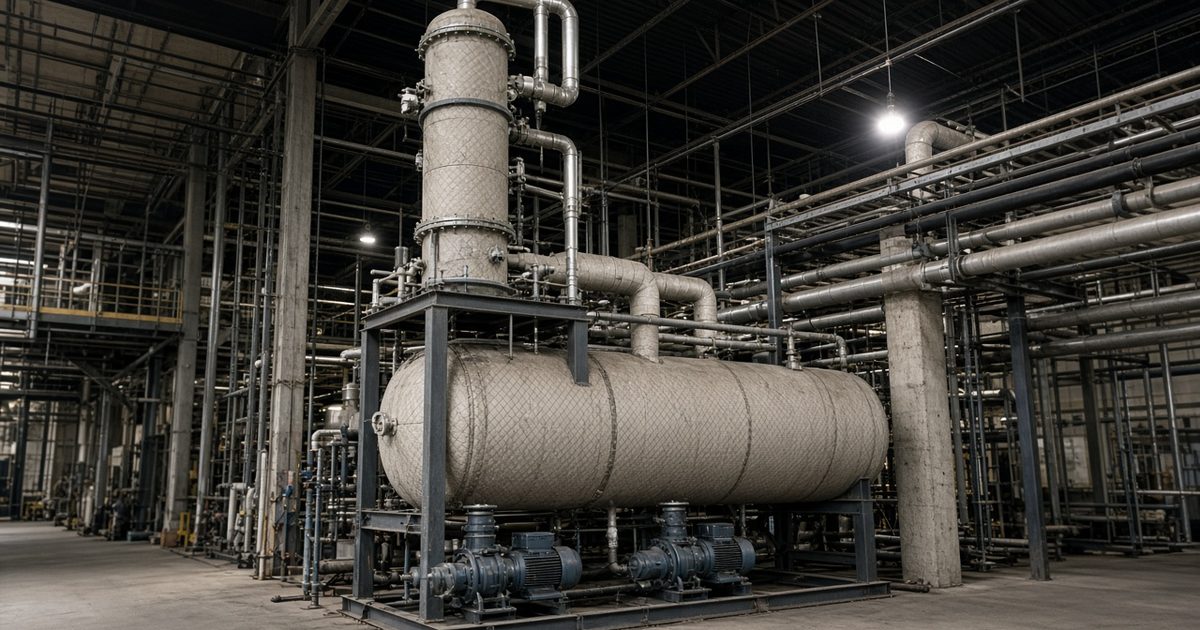
If your facility runs a steam boiler of any real size, there is a good chance it has a deaerator, or a feedwater tank that does a similar job. It is one of the least visible parts of the boiler plant, yet it has a big influence on how long your boiler, piping and pumps last.
This guide explains in plain English what a deaerator does, why oxygen in feedwater is such a problem, how the equipment works, and the warning signs that tell you it needs attention.
The short answer
A deaerator removes dissolved oxygen and other non-condensable gases, mainly carbon dioxide, from boiler feedwater before that water enters the boiler. It also preheats the feedwater and stores it so the feedwater pumps always have a supply to draw from.
Why oxygen is a problem
Any water that has been exposed to air contains dissolved oxygen. Makeup water from the city or a softener carries the most, and condensate picks up more wherever the return system is open to the atmosphere. When that water is heated inside a boiler, the oxygen attacks steel and causes pitting corrosion.
Pitting is especially damaging because it does not spread evenly. It concentrates in small spots and eats deep into the metal, so a tube or a section of piping can perforate long before the rest of the system looks worn. Carbon dioxide causes a second problem: it forms carbonic acid in condensate, which corrodes return lines, traps and fittings.
How a deaerator works
Gases are less soluble in hot water than in cold water. A deaerator takes advantage of that by heating the feedwater with steam to very near the saturation temperature for its operating pressure. At the same time it breaks the water into thin films or fine droplets, using trays or spray nozzles, so the gases have a large surface to escape from.
The released gases, along with a small amount of steam, leave through a vent at the top of the unit. The deaerated water drops into a storage section below, which supplies the boiler feedwater pumps. Most plants still feed a small dose of chemical oxygen scavenger to remove the trace of oxygen that remains; our guide to boiler water treatment basics explains how mechanical and chemical treatment work together.
Deaerator vs. feedwater tank
Smaller plants often use an atmospheric feedwater tank instead of a pressurized deaerator. A feedwater tank still heats the water and lets some gases escape, but it cannot reach the low oxygen levels a pressurized deaerator achieves, so it relies more heavily on chemical scavengers. Which one fits your plant depends on boiler size, operating pressure and how much makeup water you use.
Benefits of a working deaerator
- Less oxygen corrosion in the boiler, economizer and feedwater piping
- Lower chemical scavenger usage and cost
- Preheated feedwater, which reduces thermal shock to the boiler
- Steady storage for the feedwater pumps, so they always have water at the right conditions
Signs your deaerator needs attention
- Dissolved oxygen test results above your water treatment target
- Rising oxygen scavenger usage with no change in load
- Unstable deaerator pressure or temperature
- A vent plume that is missing or much larger than normal, which usually means the vent valve is set wrong
- Water hammer, banging or unusual noise in the tank
- Feedwater pump cavitation or loss of flow
- Corrosion, leaks or damaged insulation on the vessel
Several of these symptoms overlap with pump trouble. If your pumps are noisy or cannot keep up with boiler level, read our article on boiler feedwater pump problems. Excess flash steam from failed traps can also push the deaerator or receiver too hot; see steam trap failure signs.
Inspection and maintenance
Deaerators are pressure vessels, so they should be inspected as required for your facility, insurer and jurisdiction. Internal inspections can reveal cracking around welds, damaged or displaced trays, and spray valves that no longer atomize properly. Between inspections, operators should log deaerator pressure and temperature, check the vent plume on rounds, and track dissolved oxygen and scavenger usage with the water treatment provider.
Support for your steam plant
Boilers on Demand is a woman-owned commercial and industrial boiler company based in Houston, with 24/7, 365-day emergency dispatch. We service firetube and watertube boilers, steam and hot water systems, and all major makes and models, and Boilers on Demand, LLC holds a National Board R certificate for code repairs on boiler pressure parts.
We work on boilers, feedwater systems and controls across Houston, Baytown, Pasadena, Deer Park, La Porte, Channelview, Humble, Conroe and The Woodlands. If repairs will take your boiler offline, our rental boilers can keep steam on. Learn more about our commercial and industrial boiler repair services, or call 936-300-4111 any time.