A hydrostatic test, usually called a hydro test, is a pressure test of a boiler or pressure vessel using water. It proves that the pressure-retaining parts (shell, tubes, tube sheets, welds, fittings and gaskets) are tight before the boiler goes back into service. For facility managers, a hydro test is most often part of the job after a repair, a retube or an installation, or something an inspector asks for while looking into a suspected leak. This guide explains when a boiler hydrostatic test is usually needed, how it is performed, how to prepare your facility and what happens if the boiler does not pass.
What a hydrostatic test actually checks
During a hydro test the boiler is completely filled with water and pressurized above its normal operating pressure while the inspector and technicians look for leaks, weeping and distortion. The test answers one practical question: will the pressure parts hold? It does not replace a full internal and external inspection, a combustion check or a test of the safety controls, but it is the most direct way to confirm that a repaired or newly installed pressure boundary is sound.
Water is used because it barely compresses. If a weld or tube end lets go during a hydro test, the pressure drops almost immediately and very little energy is released. The same failure under air or steam pressure would be far more dangerous. That is why water testing is the standard method for boilers.
When a hydro test is usually needed
Requirements depend on the applicable code, the jurisdiction, the Authorized Inspector and the scope of work. In Texas, boilers are regulated through the Texas Department of Licensing and Regulation, and your inspector has the final word on testing. Common situations include:
- After repairs to pressure parts, such as welding, tube replacement, retubing or tube sheet work. Our guide to boiler tube leak causes and repair covers the repairs that most often lead to a hydro test.
- New installations and boilers that have been relocated, as the code and inspector require.
- Reconditioning projects, where a hydrostatic test confirms the pressure parts before the boiler returns to service.
- When an inspector requests one to evaluate a suspected leak or a questionable condition found during an inspection. See boiler inspection requirements in Texas for how inspections work.
Repairs to pressure-retaining items, and the testing that goes with them, should be handled by an organization authorized to do that work. Boilers on Demand holds a National Board R certificate of authorization for repairs. Our article on ASME and National Board certification in Texas explains why that credential matters when you hire a contractor.
How the test is performed
- Isolation. The boiler is isolated from the steam or hot water system. Safety valves are removed and the openings blanked, or the valves are gagged according to the procedure so they do not lift during the test.
- Filling and venting. The boiler is filled completely with water and every high point is vented so no air is trapped. Trapped air makes the test less safe and can hide leaks. The water should be at a suitable temperature; water that is too cold can make the outside of the shell sweat, which hides small leaks.
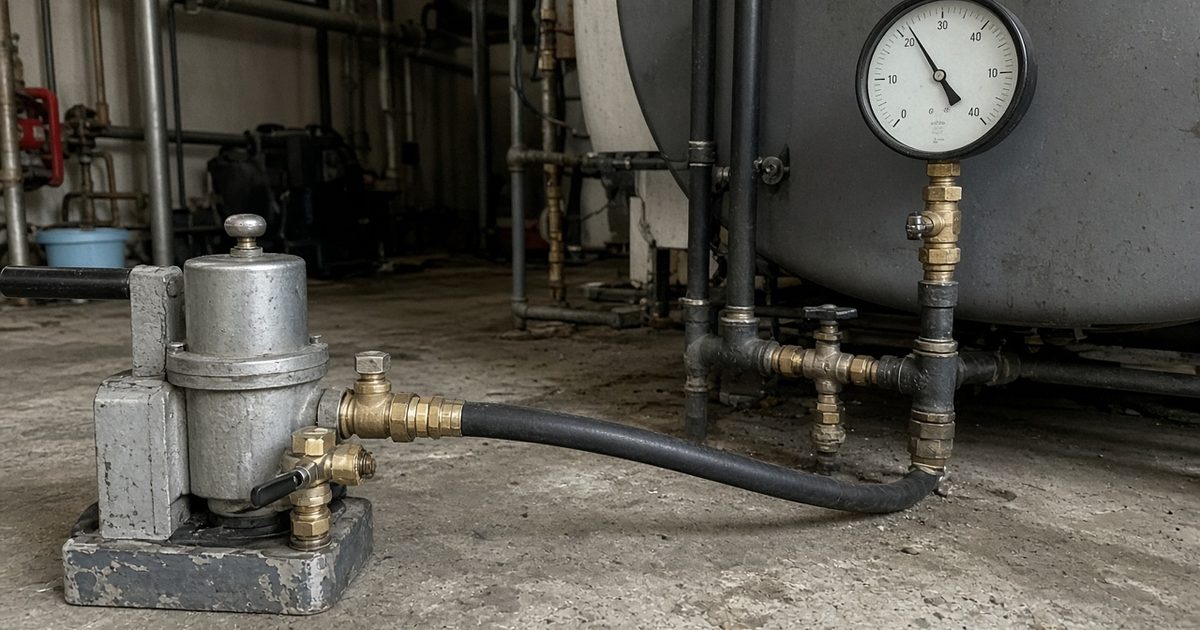
- Pressurizing. A test pump raises the pressure gradually while a calibrated test gauge is watched. The test pressure is set by the applicable code and accepted by the inspector. For new power boilers it is commonly 1.5 times the maximum allowable working pressure (MAWP). After a repair, the inspector decides whether a hydro test is needed and at what pressure.
- Holding and inspection. Pressure is held while the inspector and technician check welds, tube ends, handholes, manways, gaskets and fittings for leaks or weeping. Many procedures lower the pressure to working pressure for the close visual examination.
- Depressurizing and restoring. Pressure is released slowly, the boiler is drained or left filled as planned, safety valves are reinstalled or ungagged, and the results are documented.
How to prepare your facility
- Coordinate with the inspector early. Testing has to fit the inspector's schedule, so book the date as soon as the repair plan is set.
- Plan for downtime. The boiler will be out of service for the repair, the test and the restart. If your process or building cannot go without steam or hot water, a temporary rental boiler can carry the load.
- Clear access. The inspector needs to see welds, tube ends and openings, so remove stored materials and make sure lighting is adequate.
- Have records ready. Keep recent inspection reports, repair documentation and drawings where the inspector can review them.
What if the boiler fails the hydro test?
A failed hydro test is not a disaster. It tells you exactly where the problem is while the boiler is cold and full of water, instead of under steam. Leaking tube ends may be re-rolled or the tube replaced, a weld defect is repaired, and a gasket is replaced. Then the boiler is tested again. It is far better to find a leak at the test pump than during startup on a cold morning.
After the test: returning to service
Once the boiler passes, follow a proper startup procedure: check water level and chemistry, confirm controls and safety devices, and bring the boiler up to temperature slowly. Our boiler startup checklist after a long shutdown walks through the steps, and pressure relief valve testing explains how to confirm the safety valves are ready.
Frequently asked questions
Why is water used instead of air for a boiler pressure test?
Water barely compresses, so very little energy is stored during the test. If something leaks or fails, the pressure drops right away. Air stores much more energy and makes a failure far more dangerous.
Does every boiler repair need a hydrostatic test?
Not always. It depends on the code, the type of repair and the Authorized Inspector. Repairs to pressure parts, such as welding or tube replacement, commonly require one.
How long does a boiler hydro test take?
The test itself is usually a small part of the outage. Filling, venting, inspection and restoring the boiler take more time, and the inspector's schedule often sets the date. Ask for a timeline when the repair is quoted.
Hydrostatic testing with Boilers on Demand
Leak investigation and hydrostatic testing are part of our commercial boiler repair service, and every boiler reconditioning project finishes with a hydrostatic test and return to service. We also handle boiler installation, including commissioning and testing, and we coordinate with your inspector. Boilers on Demand serves commercial and industrial facilities across Greater Houston, including Houston and Conroe. Call 936-300-4111 or request a quote.